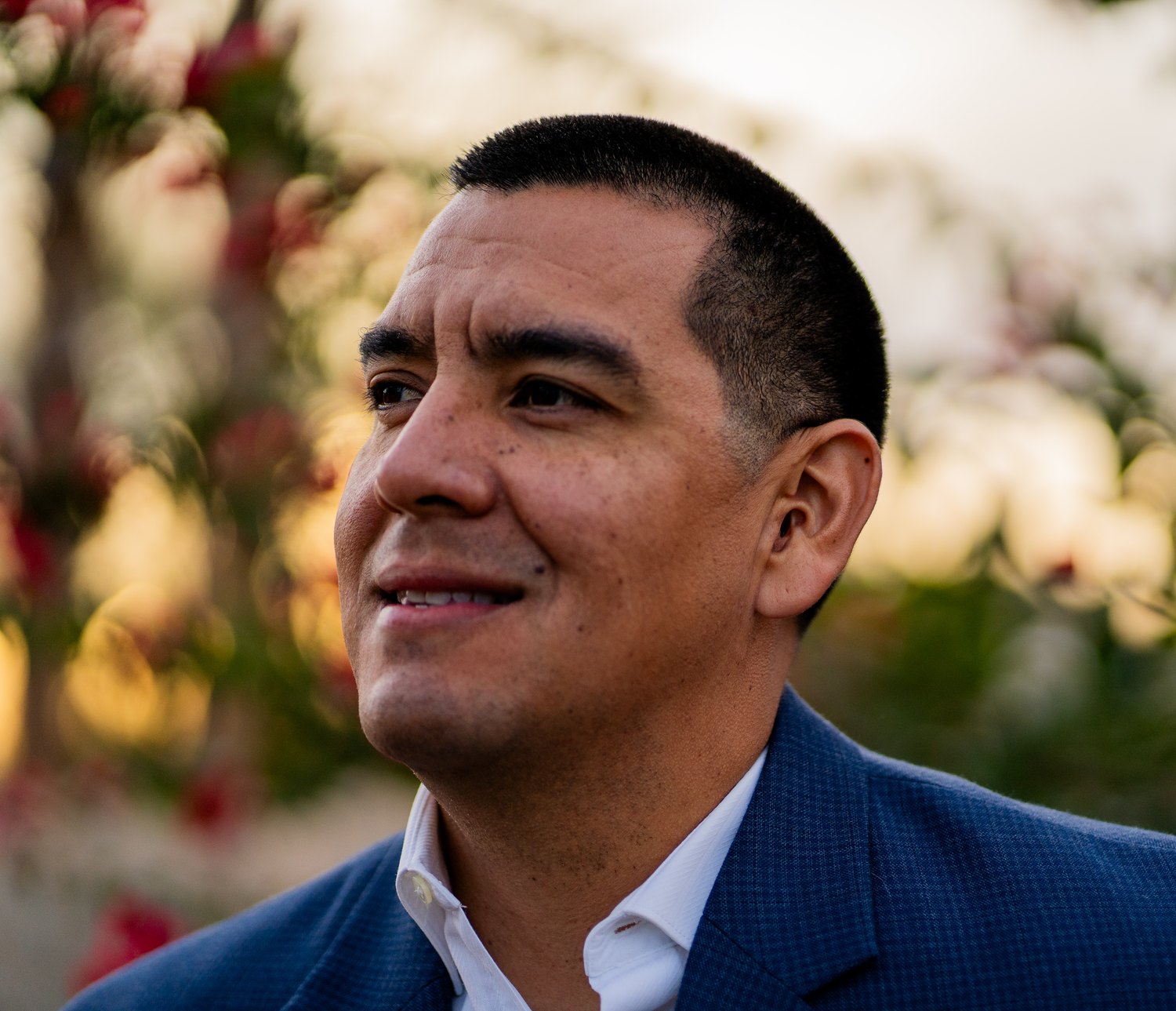
Greenhouses. Buildings. Trucks. Cameras. Drones. It reads like a man who couldn't sit still. It's one idea, wearing different clothes.
Before All Of It
The part nobody in the stands is watching
I learned at a Formula 1 racing school, and I was not the driver. I never got the chance to drive. I was the one monitoring. Tire pressure, safety equipment, vehicle readiness — checked, and checked again, so that when our drivers went out to find the limit, nothing underneath them failed.
Nobody in the stands is watching that job. It is the entire reason the other one works.
Every job on this page after it is the same job. I have only ever changed what I was checking.
2012 · The Reason
It started with water
Everything on this page exists because of one problem: we live in a desert, and we are running out of water.
So I started as a consultant with one vision — robotics automating greenhouses, so a homestead could feed itself on a fraction of what it takes. Five of us built it. Arduino, Raspberry Pi, sensors for CO2, light and particulates. We wrote software that measured a plant's ability to sweat.
Chickens fed the fish. The fish fed the plants. Nothing in that system was waste — everything was the next thing's fuel.
"The moment I saw a simple ping on a screen in plain text — that was my first introduction to terminal. That's when it all started."
The In-Between
Four industries, learned from the inside
What happened between the greenhouse and now is hard to sum up, because it was never one trade. It was construction, transport and logistics, automotive service and repair, and horticulture — each one learned the only way I know how, which is by doing the work.
Construction: houses rebuilt and converted into dwelling units. Kitchens, bathrooms, fireplaces. Thirty apartments turned over a month — the schedules, the diligence, the punch list.
Transport and logistics: buildings sixteen feet wide, forty feet long and fifteen feet high moved across the state of Arizona — over 5,000 of them, set personally, CDL in one hand and an installer's level in the other. Automotive service and repair came with it, because a fleet that stops moving is a business that stops working.
Horticulture: I came up as an irrigation tech and left as general manager of a landscaping company — still chasing the same thing I started with in 2012. Water.
Say that one precisely: I'm a gardener who managed a landscaping company. Those are different jobs. A landscaper installs what he's handed; a gardener is trying to understand why it lives.
And say this one plainly too: I'm not an expert gardener, and I'm not an expert at all of it. I know enough of each of these trades to be dangerous — and that turns out to be most of the job. The experts are in the Guild. Knowing enough to speak all of them is what lets me put the right one in front of you.
There is one thing I am an expert at, and it is the thing this whole page is about: getting close enough to see what is actually there, measuring it, and building the system that keeps measuring after I leave. Everything else, I hand to somebody better.
The whole way, I was working beside people far better than me at one thing each: world-class gardeners and horticulturists, contractors building ponds and water features, tilapia farmers, IT engineers.
"I've spent over a decade building and fostering relationships for this very moment — not knowing it. Just following my North Star."
That's the Guild. I didn't assemble a network. I earned one, one job site at a time — and it took a decade to find out what it was for.
And it's why I'm not a specialist. I'm the generalist who can stand in four industries at once and still speak every one of their languages.
Nobody arrives at that. You strive at it — and anybody willing to can.
One Day, In The Desert
Five trucks, and nobody could see
Five buildings, one customer, roughly two hundred thousand dollars. We mobbed out there at once — and the maps were lost. Five men, in the desert, guessing.
The customer waited. Nobody could tell them anything, because nobody knew anything. I had no standing, no title and no tools to fix it, so I rolled my eyes and drove home.
"That's when I started becoming obsessed with that customer."
That eye-roll is the seed of everything on this site.
The Field
Inches away, through a lens
Then it came together somewhere I never expected: chair photographer and videographer for a high-school marching band — my son's band. Practices, backstage, on the field. Inches away.
I flew the drone for their films. I shot their portraits from the air — for the yearbook, for the media, for a hundred families who wanted to see their kid the way I saw mine.
The same drone that maps a contractor's terrain took my son's yearbook photo. They were never two different skills.
Now
The greenhouse, built for a business
The Polymath Guild is the 2012 greenhouse pointed at an operation instead of a plant. A closed loop where nothing is wasted and every part feeds the next — the customer nobody heard from, the specialist who never heard the job existed, the follow-up that stopped.
It turns out a business leaks the same way a desert does. Quietly, constantly, and mostly where nobody is looking.
So what I actually build now are architectural design systems, and I build them with AI. I'm a licensed Part 107 drone pilot, and I fly RTK — real-time kinematic positioning, where the aircraft is corrected against a ground reference in flight, so a point on the ground is a point you can build against. Out of that comes topographic mapping, elevation models, and the volumetric calculations that say how much dirt is really there.
But the flight was never the product. Centimetre-accurate capture is the raw material for a working model of a real place — not a wireframe and not a render, but a twin of a business you can move around inside, with the systems running in it. Traditional modelling builds the shell. I'm interested in what lives inside it: the things that answer, schedule, track and follow up, running against a model of the actual site they belong to.
The fourth industrial revolution was about machines replacing people. The fifth one is about machines working alongside them, with the person put back in the middle — and that is the only part of this I care about.
Which is why the number I care about isn't uptime or tickets. It's hours. Every system here exists to hand time back to an owner already working twelve of them — and then to prove, on paper, that it did.
Same obsession. Better tools. And this time I have the standing to fix it.